It's interesting that they don't mention how/if they're avoiding false positives. I don't doubt that some people have exceptional facial recognition skills, but if they're given a face they haven't seen before, how likely are they to match that face with someone they have seen? How do they know that someone wearing a mask on a security camera is enough information for him to actually make an accurate match?
I'm worried this might be another case of police over estimating how effective something is (like hair DNA forensics) to make arrests, with innocent people paying for it.
You're really on to something with parallel construction.
Using Palantir they can map all the celltower data, etc, to find people who are present at the place and time of multiple crimes. But they don't want to explain all this in court.
So they sit Constable Collins down with the video footage to parallel reconstruct evidence for the jury. And the PR department then decides to turn him into a super-hero with mythical powers, to further the cover.
My first thought was to compare this to drug dogs in the US, who are trained and encouraged to render false positives as a means of delivering probable cause.
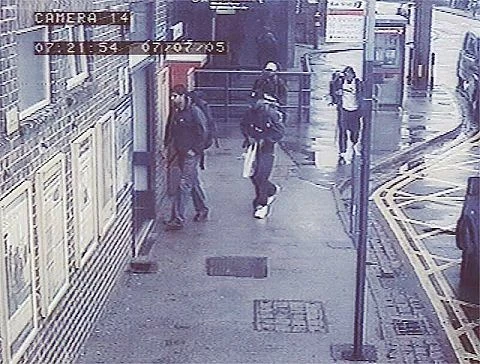
I'll tell you a true story a few years ago while I was supervising a training session for divers at the swimming pool, someone broke into a some of our lockers. He got away with phones, tablets, credit cards, cash. Stupid crime because we can remote-brick devices now, cancel credit cards, and the money he stole from my wallet was actually Mexican. Anyway, he was captured on CCTV inside the building and outside, but all you can tell from the footage, that the police showed me, was that he was a black guy about 6 feet tall, and that's it. So when people worry about the surveillance state I just smirk. None of it actually works in any useful way, it's all security theatre.
Oh, wait, it is useful for extorting motorists who stray into an unmarked "bus lane", but that's about it.
>So when people worry about the surveillance state I just smirk. None of it actually works in any useful way, it's all security theatre.
This was what I always suspected pre-Snowden: that the government simply wasn't capable of creating a system to effectively monitor all internet traffic because they didn't have the technical chops. Which, in, say, 2001, might have been true.
Turned out all they needed was time and money and they had both and then once it was revealed that they could do it and actually do it rather well it came as a shock (to me, at least).
Two years ago was a long time in camera and facial recognition technology.
> When it does happen, you'll barely notice it either. You'll wake up one day, read the news and discover that somebody was caught using facial recognition technology that the police has been using for a year and it only came out because some court docket had to be made public.
The police is pretty open about the legal powers they have and the technology they use.
And people have already been caught by facial recognition - the submitted article talks about it.
A woman was found stabbed to death outside her house, everyone who would have any reason to mean her harm had a reliable alibi.
Until the CCTV footage was analysed properly, and a suspicious car was found to have unique identifying marks. Further research of phone records revealed that in fact her husband was the primary architect of her murder and had orchestrated it with others.
CCTV was pivotal in detection and conviction. Nobody gives a shit about your phone or your tablet. People's lives matter, and one murderer caught is worth a thousand fines which would be overturned on appeal.
^ The mentality that brought us the security theater at the TSA, the incredibly invasive surveillance of the internet by simply collecting everything on it, and continued reduction of personal rights in favor of "security". Enjoy your fallacious arguments folks: hasty generalization, cherry picking, anecdotes, appeals to emotion and fear; some of them shown in the parent comment, ... until you wake up.
I take it you've never heard the quote "Those who would give up essential Liberty, to purchase a little temporary Safety, deserve neither Liberty nor Safety"?
Or have you heard it and are merely blind to how you are giving up essential liberty to purchase little temporary safety? "One good thing is worth a thousand bad things". How about that. I've never heard someone so elegantly crap all over their own argument.
>People's lives matter, and one murderer caught is worth a thousand fines which would be overturned on appeal.
You do know that these "appeals" aren't free, right? Or guaranteed. If you happen to be of a paler complexion and of modest means, they can be had for the low, low cost of merely your job and everything you have. If you happen to be a poor minority, however...
How long ago was this? The quality of the images from CCTV has increased a lot in recent years. See for example the number of people convicted after the London riots. And combined with gait analysis (did you know that most people's walk is fairly unique) and tracking of their cellphones its even more effective.
That's what I've always wondered really, why are CCTV's often so bad? The old systems (from what I've seen on TV anyway) seemed to put the image of four cameras onto one video tape, reducing quality even more.
Of course, a million cameras running 24/7 produce an enormous amount of data, that just increases exponentially as quality improves. They can probably easily discard 90% of the footage with basic checks (is there anything besides the background visible), and use a smart compression algorithm, but still.
I'm generally okay with surveillance, but people should know the capabilities of what's already in place, and your comment seems to trivialise the powers they have.
If it had been a more serious crime (murder, rape) they would have looked for all the other security cameras in the area, and then worked out the route the criminal took to get to the crime scene and to get away from the crime scene.
The images they showed you were not good - but with a million cameras there's going to be variability in image quality and length of data storage.
... and of course making the problem systematically worse.
They explicitly state that they're after people who were filmed - just filmed - at the London riots a few years ago. They're looking to arrest them, and to extract damages from them.
At those riots, absolute worst case 10-20% of people will have stolen or smashed things, with most just rallying for justice. But that doesn't even matter. The vast majority of those people aren't criminals, and even of the ones that did commit criminal acts during those riots 99% aren't "regular criminals" (meaning any more disrespectful of laws than a bad landlord is, day-to-day).
But arresting these people will seriously impact their situation, their job, their prospects, and bring them a LOT closer to becoming criminals. And even the ones where it doesn't make them criminals, it will make them much more likely to riot again, for obvious reasons.
This is stupid, dangerous, and merely meant to make a few people in power feel good about themselves.
Can you give examples of people who were arrested for no -criminal behaviour? I'd thought they were just arresting people who'd been pictures commuting crimes?
Also: why is being arrested such a big deal? You'll get mugshotted, swabbed, but unless CPS charge you (for which they need to believe they have a reasonable chance of a conviction), it's not going to show up in a background check.
I don't think you read either of the links you posted. For starters, you have to admit guilt to get a caution. Secondly, can you give ANY examples of people from the London riot's who were arrested for attendance only? Like even a single example?
Firstly this is bigger than just the riots. There are people doing long sentences for being present at crimes committed by other people. (Some of them may be fully deserving as they planned it together but others rather less so.)
Secondly do you know anyone who's ever been questioned by the police? The situation when they offer you the caution is rather intimidating.
>Can you give examples of people who were arrested for no -criminal behaviour? I'd thought they were just arresting people who'd been pictures commuting crimes?
In my country? Tons. And more people who have been arrested while being non-criminal in a demonstration, and then falsely accused of criminal behavior (and with stuff planted on them).
Sometimes that gets dispelled in court, othertimes there is even third-party footage showing police planting stuff on them.
And then there are police units in disguise coming out of police vans, merging with peaceful protesters, and inciting violence and damages to break a demonstration.
>why is being arrested such a big deal?
Depends on the country. In the UK, but several others too (including mine) you can be held without trial for months (up to a year or so actually), you can get beaten up in the police department, etc.
The net effect, however, is to make sure ~4000 people will have less choices in the future, and a more miserable life.
Looting and burning a city on a large scale, of course, will always be one of the remaining choices. Furthermore, the more miserable life part will provide extra incentive to do so.
They are admitting to using two year old footage to identify people in a crowd, who are associated with people who turn violent.
It implies that they can and will dedicate that much time and power to put you on lists and possibly harass you for exercising your freedom of speech and assembly.
Given the relationship between the police and protesters, I wouldn't want to suffer the repercussions of being in their systems as one.
The result is that I'm less likely to become politically active out of fear of being identified and associated with subversives in the eyes of my government.
I may have missed it, but I didn't see where the article states that they were after people who were merely present. It implies that they were looking for people like Stephen Prince who were actually filmed looting, burning, and assaulting.
I would argue that it doesn't even matter, but I'll try to clarify my reading of the article. The example name they give is "an obvious case" (nevertheless giving a name like this of someone who isn't convicted is an egregious violation of due process).
But here's the paragraph I'm talking about:
> Soft-spoken and gentle-mannered, Constable Collins carries a baton and pepper spray, but no gun. His weapon is his memory: Facial recognition software managed to identify one suspect of the 4,000 captured by security cameras during the London riots. Constable Collins identified 180.
Note the nice, round number. I wonder how that was established. Note that the sentence strongly implies that the only thing that makes these people suspect is being "captured by security cameras during the London riots". Those security cameras are pointed at streets, not shops, not office buildings, not private property, they couldn't have gotten a good look at the people who looted and burned.
This footage is very low quality: grainy 640x400 or less (cheap image sensors from around 2008, also the common resolution of the example images) black-and-white filmed in very bad lighting conditions at a distance of at least 6-7 meters (they hang those cameras up high), with most people on those cameras at at an average distance of 30 meters (my guess at half the distance between two of those security cameras from walking around in London). At that distance, a face is between 5x5 and 20x20 pixels.
You can't tell me they have less than 10% error rate. And of course, the subject given is black, and all the police officers mentioned are white. I'm not even implying racism here, people are notoriously bad at identifying members of other ethnic groups correctly. Example of footage here[1]) And aside from the people who were right next to the police, I doubt there were many assaults at all, though I'd expect a few.
But even if they do find the looters. They're not catching any reasonable percentage of them, they're just randomly punishing 4000 people : let's say they actually "catch" 2000 of them, and let's assume a 30% error rate (seems like the absolute minimum reasonable to me). So in effect, they're slapping jail on 660 innocents, and 1340 people who damaged property during a riot. Of the people who burned and looted, that 1340 is going to be, comparing with the numbers reported looting, somewhere between 2% and 5% of them.
The point is that this is going to be very bad for the social situation in London, and not going to change the fact that there's a very high chance that you can loot and get away with it during riots. It's all the bad, with none of the good.
and here I thought Atlanta was getting worrisome when they bragged about ten thousand crime/police cameras replete with statements "if you are not doing anything wrong". This is on top of all the license plate scanner equipped cars which likely one day will morph into scanning people with facial recognition software. They even secure private money to put more cameras in
>Soft-spoken and gentle-mannered, Constable Collins carries a baton and pepper spray, but no gun. His weapon is his memory
I don't like this journalistic BS trickery.
That he doesn't carry a gun is not some unique trait of him as implied here.
Most english policement DON'T carry guns (except in special units and circumstances) -- something that a lot of the US-based NYT readership wont know about.
If it makes you feel any better, damn-near everybody in the US knows that English policemen don't carry guns. It's pretty much the first thing people bring up when one mentions bobbies.
In what circles of the society? Among hackers, university educated people, naturally curious, etc (and Pulp Fiction fans), sure. But there are vast expanses of the population who don't know even more basic stuff and I would argue those are the majority.
It's not really a competition. Yet. Anyway, I think you're missing the point. There's a great mystery here. How can the human mind do this? "Facial recognition software managed to identify one suspect of the 4,000 captured by security cameras during the London riots. Constable Collins identified 180". And dollars to donuts Constable Collins used a fraction of the energy too -- maybe even a just a donut's worth -- he is a copper after all.
Indeed. My first thought was "Are tech companies trying to poach these folks in order to try and deconstruct what cues they're using, and/or to create a corpus of verified matches from low-quality source?"
I think the most interesting point about this is that the human mind doesn't know how the human mind does it.
I wonder what kind of software they compared to Constable Collins. Did that software use designed features or learned features? What sort of data set was it trained on?
It wouldn't surprise me if current state of the art software that learns features from real CCTV footage fared a lot better than what they were using in 2011.
I'm sure his false positive rate is zero, and that he's never caused an innocent person to be arrested or imprisoned. After all, he's in the top 1% on a test designed by people from Harvard. Yes, Harvard. Thank the lord that once a policeman's fingered a known criminal, a jury will never disagree with them. I bet his conviction rate is stellar.
They named a person in the article based just on this police officer's word. He might never be able to get a job again if this article stays on the first page of google hits for his name. Who knows if he's the same person? Is there anything else it could be based on?



I'm worried this might be another case of police over estimating how effective something is (like hair DNA forensics) to make arrests, with innocent people paying for it.